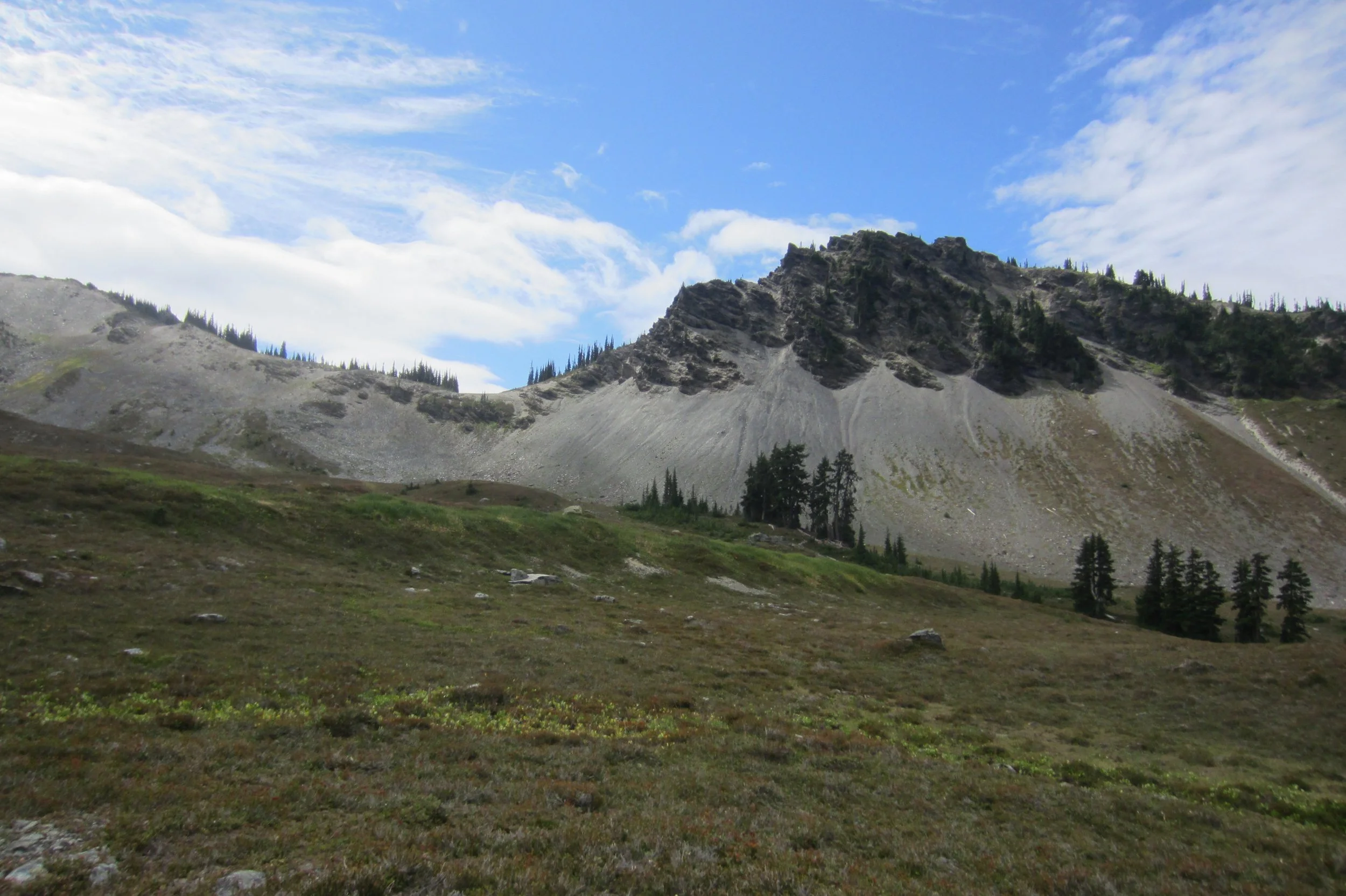
Mountain Magic
Anderson Pass, Olympic National Park
There is nothing like the darkness of a seaside winter to set my mind wandering to high-mountain landscapes. Hidden by clouds now most days, the Olympic peaks still appear every now and then. They are freshly dusted with snow, glowing bright, inspiring the memory just by their mere presence. While I delight in the goldfinches that continue to spend their winter in our garden and the trumpeter swans that have returned to nearby flooded valley bottoms, it is to the mountains that my thoughts return again and again. The high country, where Olympic rivers begin and alpine meadows provide a change from the thickly treed temperate rainforest, is a land I like to remember as I remain (mostly) at sea level for a few months.
This past summer, friends and I backpacked from the east side of the Olympic Mountains to the west. From the Dosewallips River that pours into the Hood Canal to the Quinault River that flows into the Pacific Ocean. We spent three nights in each watershed. In the Dosewallips, we found few people, empty campgrounds, and sunshine. In the Quinault, we descended almost immediately into a complete fog (that lasted until the next morning), and found many people and damp and cool conditions. At Anderson Pass, the break between the West Fork of the Dosewallips and the Quinault, a small pool hosted dozens of Cascades frog larvae with one adult frog sunning on the shore. Now there will be several feet of snow above this pond, with the tadpoles and adults all in a state of hibernation.
Camp Siberia
The year before, we went to the headwaters of the mainstem Dosewallips River and camped at Dose Meadows. For that trip we volunteered for Olympic National Park doing marmot surveys. With Sentinel Peak (elev. 6,592’) and Mt. Claywood (6,836’) nearby, we traipsed around areas of true mountain magic: large meadow systems where we saw marmots, adults and young; a feeding black bear; and more frogs and tadpoles, including a macabre scene of a dead tadpole being eaten by its brethren.
The marmots too are now in their burrows fast asleep, as are the bears, while the deer and elk have moved to lower country. Yet, there will still be some bustle. Our mustelid friends, the martens and fishers, will be active, as will Douglas’s squirrels and different birds. I think about these highest areas of the Olympics largely returning to the animals this time of year, to those who sleep and those who don’t. The scamperers, the flyers, the ones stepping gingerly through the snow drifts. I miss the meadows and the passes and the journey it takes to get to them, but they continue to live vividly in my imagination.