
Saving Snakes: A Review
Cottonmouth, Back Bay National Wildlife Refuge, Virginia, April 2017
In her recently published memoir, Saving Snakes, snakes and the evolution of a field naturalist (University of Virginia Press, 2023), Nicolette Cagle writes about the broad versus specific goals in wildlife conservation after a friend compares her rescue of six snakes (from entrapment in plastic mesh netting) to the enormity of animal death and habitat destruction worldwide. His question, “Isn’t it [the rescue of a few animals] just a drop in the bucket?” propelled her to consider people who devote their lives to one need as compared to those who have perhaps more varied contributions. Cagle writes, “As an ecologist, it’s also hard to devote myself to one aspect of the natural world because it is profoundly interconnected.” She goes on to describe her broader aim, “to help my fellow creatures, human and nonhuman, thrive, to help them live lives of meaning, value, and success, and to help people develop a positive connection to the natural world that might prime them to protect it, respect it, and grow with it.”
Saving Snakes is a great read and a very important contribution to snake conservation and wildlife conservation in general. Few animals are as maligned and misunderstood as snakes, yet they are integral to ecosystem health. They are also fascinating creatures and deserving of the right to existence apart from any "utility" they provide to their communities. There are lovely passages describing snakes. Of the Plains Hognose Snake, Cagle writes, “With a little upturned scale at the tip of their nose (hence the name hognose), perhaps meant to shovel the ground in search of its favorite prey, toads, the tan-and-brown-splotched Plains hognose Snake is downright adorable.” Also, “The fox snakes were rather a treat, being long-bodied, stained walnut-brown with coffee-colored blotches, and having very kind faces that seemed to smile.” Cagle reminds us that snakes just want to be snakes, they appreciate being left alone, and they are beautiful and magical, living a life so very different from ours in many respects, but just as worthy.
Click images to view larger.
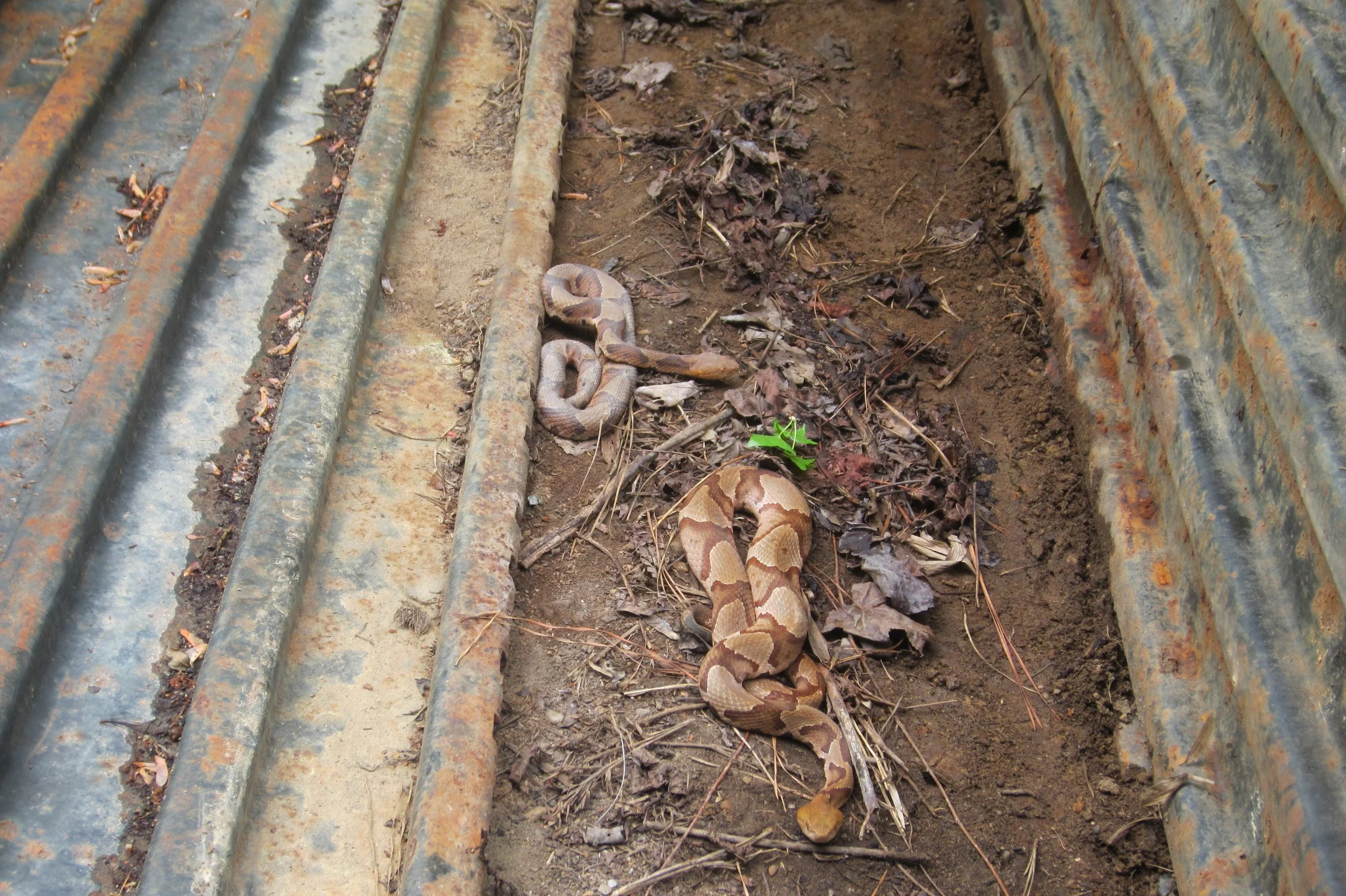
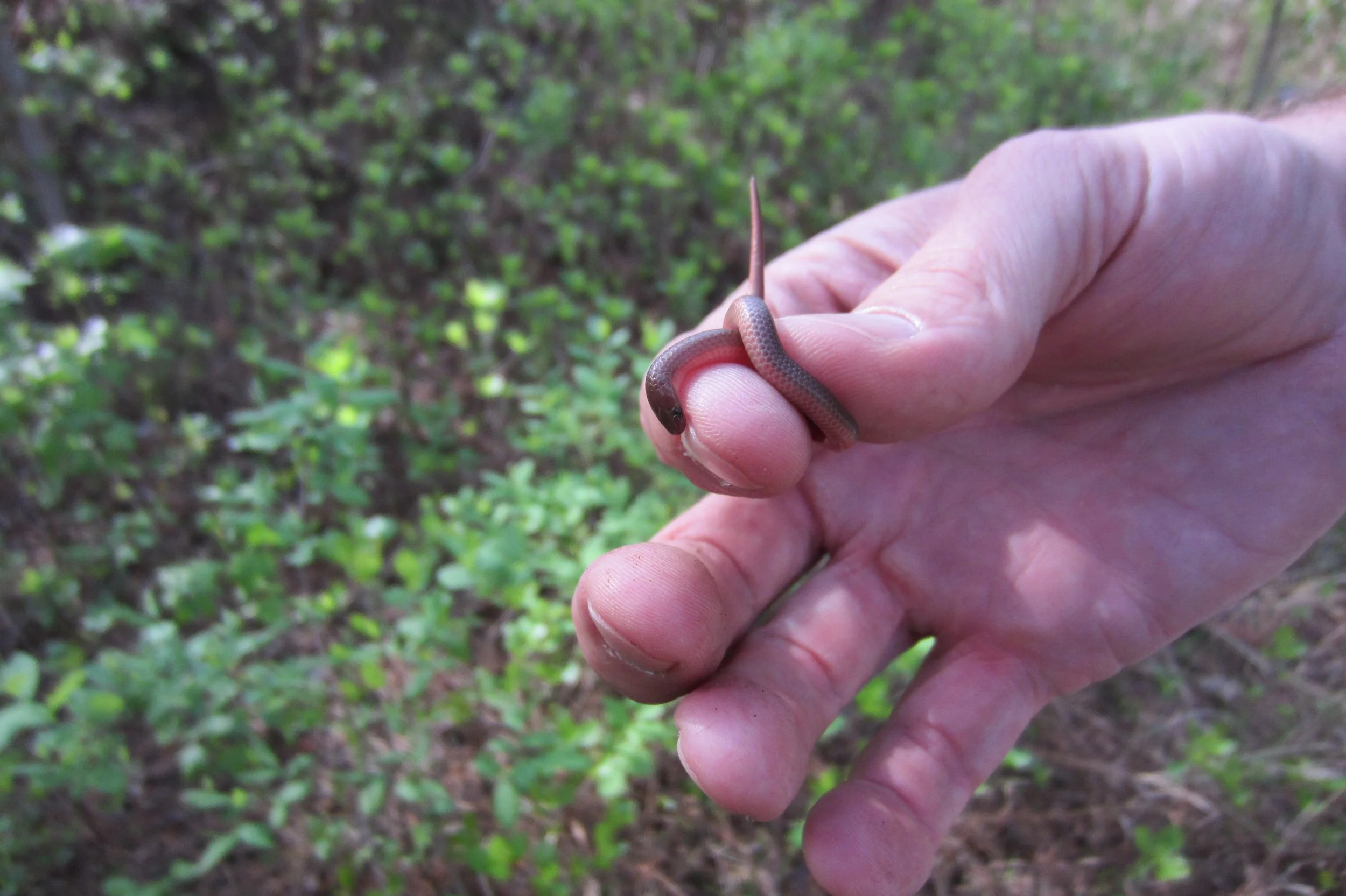
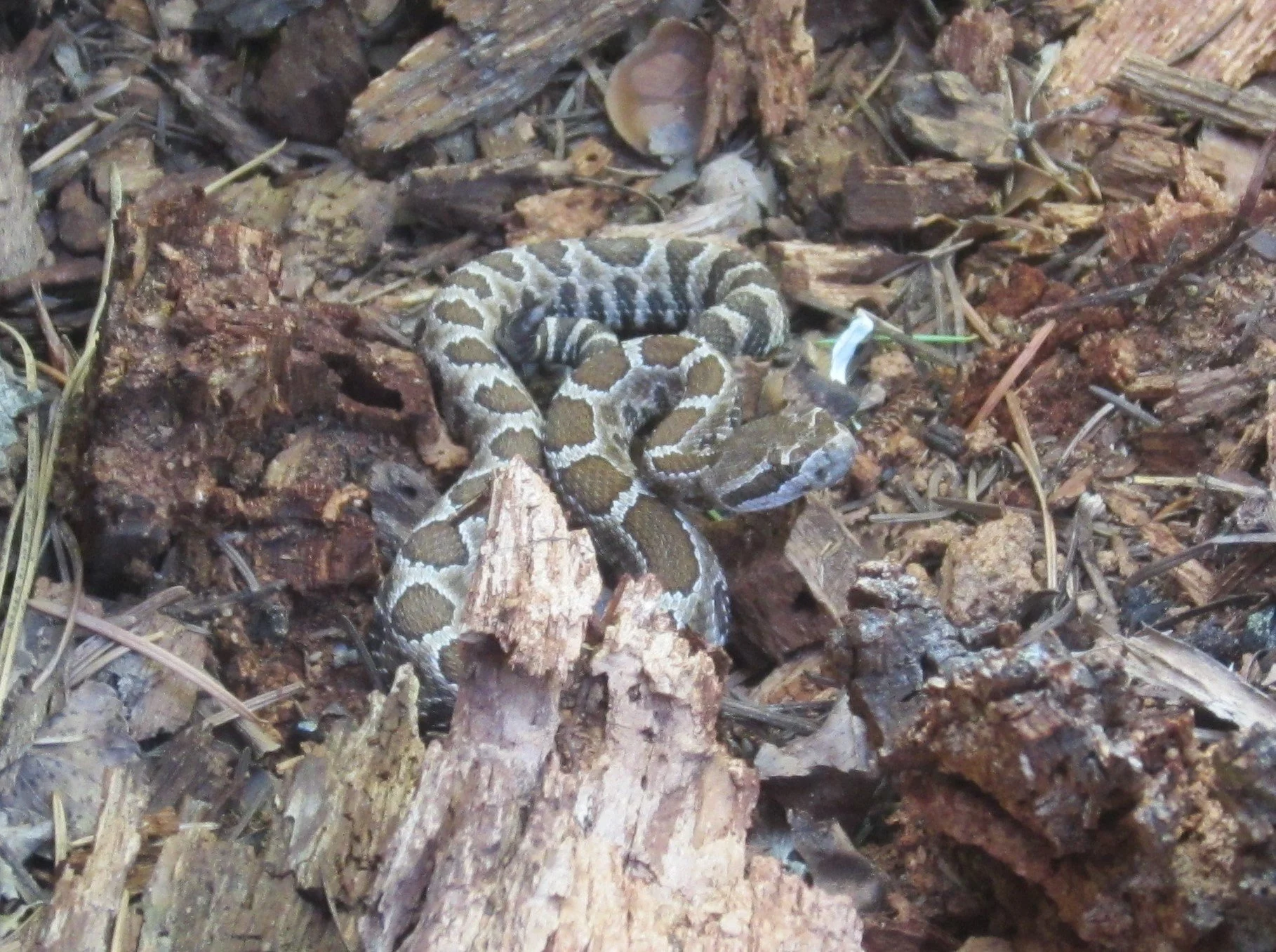
L to R. Copperheads and a Worm Snake (both in Virginia), and a Northern Pacific Rattlesnake (Washington State)
I have not worked directly with snakes. My interactions with our local garter snakes on the Olympic Peninsula are most often about helping them off the road when I find them sunning. Garter snakes release a rather potent musk when they feel threatened, and they often feel threatened when they’re picked up. So, I just provide a very gentle toe nudge to the end of their tail to get them moving off of the road. I’ve also had the good fortune to attend the Spring Snake Search in eastern Washington, https://ncascades.org/signup/programs/spring-snake-count-in-the-methow-valley. A colleague of mine is one of the instructors for this class, which takes people out looking for snakes in the Methow Valley. A combination of education and data collection, the class fosters appreciation for snakes coupled with information to dispel myths. During the class I took, I got to hold a Northern Pacific rattlesnake (with the head and upper body safely tucked inside a plastic tube) and also a gopher snake. Wonderful creatures.
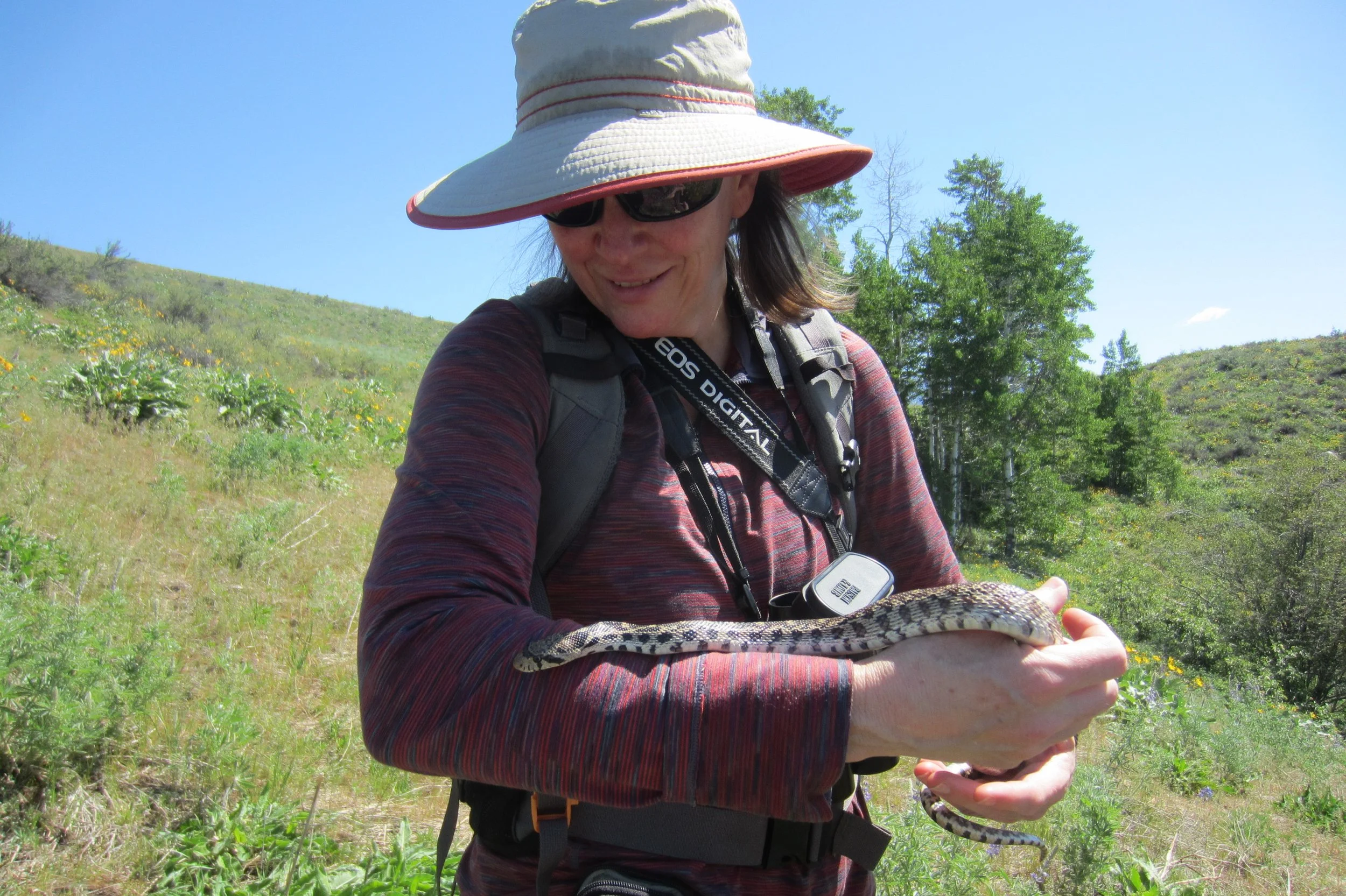
Gopher snake and friend, Methow Valley, Washington State, May 2018
Cagle brings the world as experienced by snakes to life, from the way they have intimate connection with their environment to the many challenges they face. There are painful scenes in Saving Snakes, from descriptions of rattlesnake roundups in Texas to the time Cagle found a mother Plains Garter Snake hit on the road: “Radiating from the burst belly, like the rays of the sun, were twenty slender, three-inch long babies. All dead.” For the snakes caught in the mesh: “We found a Black Rat Snake struggling and pulling, the mesh only tightening and cutting deeper into its skin.” Yet, there are also stories of people, including Cagle herself, working very hard to save habitats, change attitudes, and help others to view snakes with a more generous spirit.
These aspects of her work may be “drops in the spiritual connection to nature bucket,” as she puts it, but they are also critical if human society is ever to move past our fear and prejudice of these fantastic, important animals. Cagle's personal story as an ecologist makes this book very accessible; her writing is powerful and the breadth of her compassion so encouraging in these times when the environment is on everyone's minds but we largely continue with business as usual. Cagle reminds us that we must find another way. I love this quote toward the end of the book, which echoes what Robin Wall Kimmerer, one of my favorite writers, has described as "species loneliness”: "We are bereft of reminders of our interconnectedness with all life. We are bereft of reminders of our mortality. We are bereft of forest friends and stories for our children. Without snakes--as friends or foes--we lose our humanity.”