
The Lives of Others
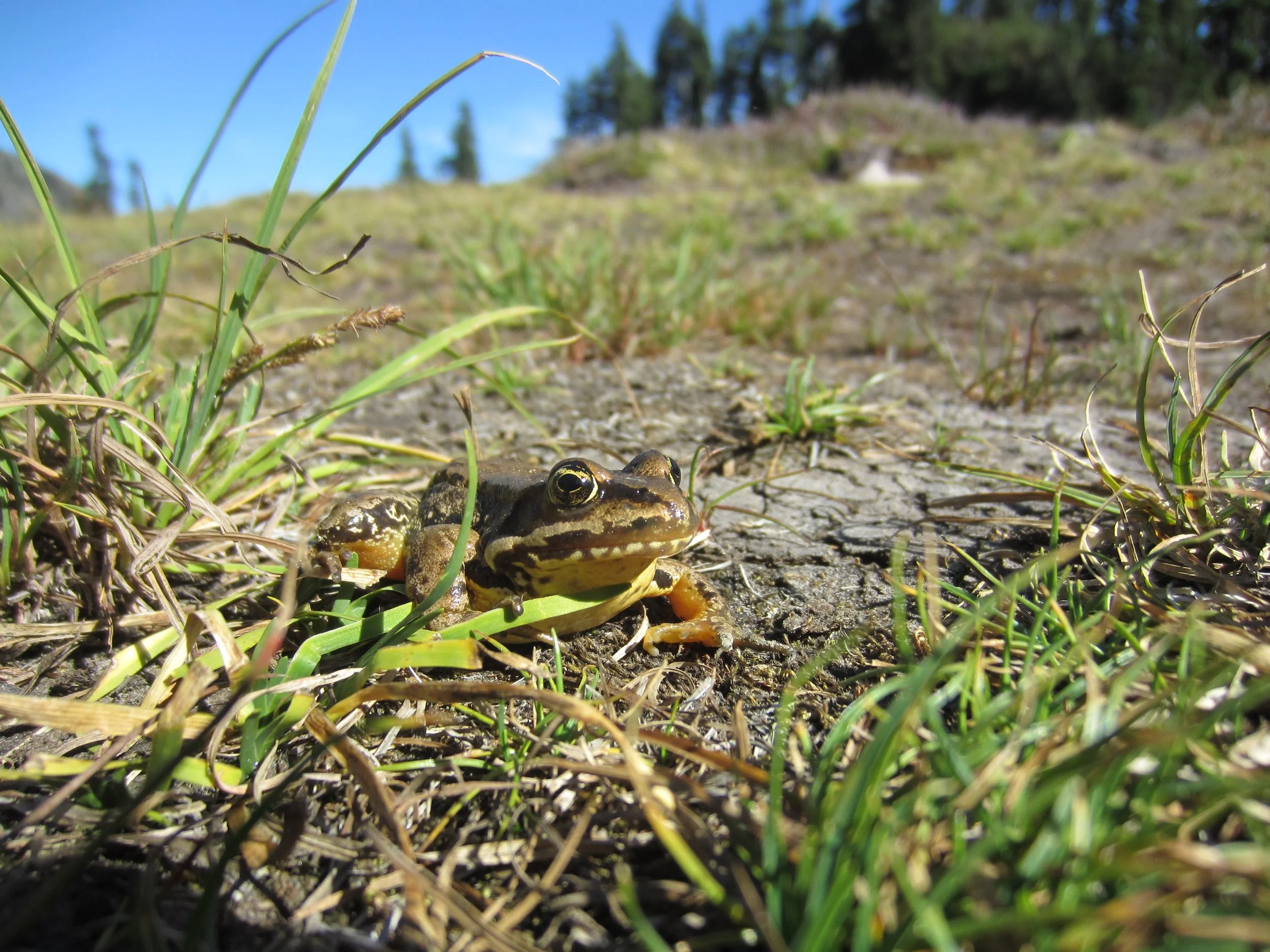
In Ed Yong’s 2022 book, An Immense World, How Animal Senses Reveal the Hidden Realms Around Us, he begins by asking the reader to imagine a room so large that it’s actually a gym and that this area is occupied by very different wildlife species, including an elephant, a mouse, a robin, an owl, a bat, a rattlesnake, a spider, a mosquito, a bumblebee, and a human. Yong’s sense of humor comes across immediately when he writes that “Rebecca,” the human, is “sighted, curious, and (thankfully) fond of animals.” He also urges us not to worry “about how she got herself into this mess,” and to “never mind what all these animals are doing in a gym.” Instead, he wants us to think about how the animals are perceiving one another. Different species are guided by different senses, some of which are experientially familiar to us as humans, e. g. vision, while others are not at all, such as echolocation used by bats. What is happening with these very different creatures as they occupy the same physical space?
Yong goes on to describe the theory of the umwelt (plural, umwelten), or sensory bubble, a concept first described by Jakob von Uexküll, a Baltic German biologist born in the 19th century. While umwelt is the German word for “environment,” von Uexküll used it to refer to more than just an animal’s surroundings. Umwelt, he wrote, is a being’s perceptual world and thus gives rise to an experience that is wholly unique to that animal based on the senses it possesses. Yong makes a very important point that each species, including Homo sapiens, is limited by their own umwelt. He writes,
“To us, [our umwelt] feels all encompassing. It is all that we know, and so we easily mistake it for all there is to know. This is an illusion, and one that every animal shares.” (page 6)
This illusion resides next to the objective environment, or umgebung, the world science endeavors to describe and quantify, but which can be challenging given that umwelten exerts a strong pull, even on researchers trained to gather information and minimize the influence of their own perceptions.
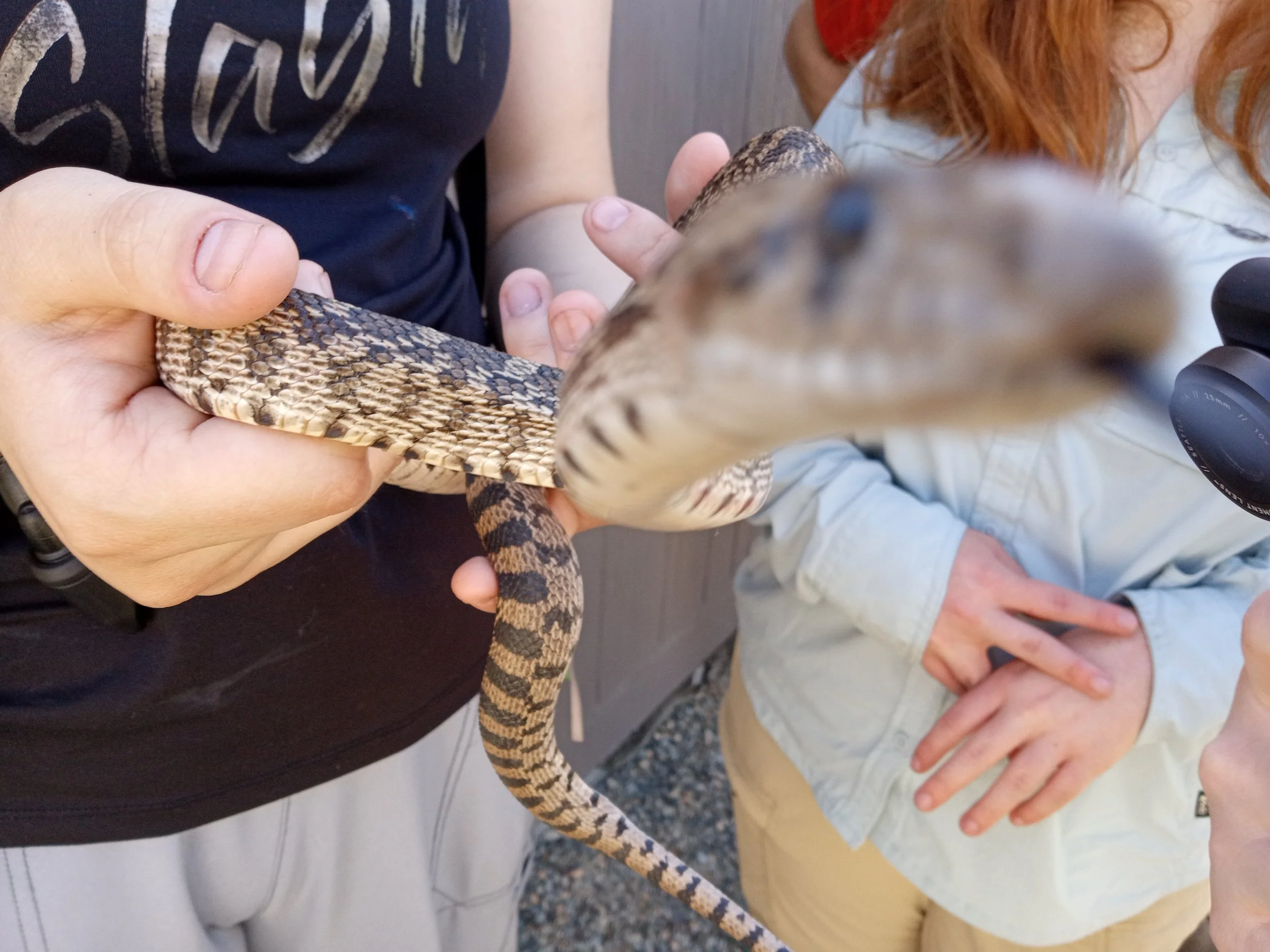
Gopher snake, Methow Valley, May 2024
This gopher snake came at me quickly as I was taking its photo. Snakes smell, and thus gather information about the world, by using their tongues to collect chemical compounds from the air or other substrates. Visual and auditory senses are not as well developed in snakes though they can hear low-frequency sounds and can detect ground vibrations.
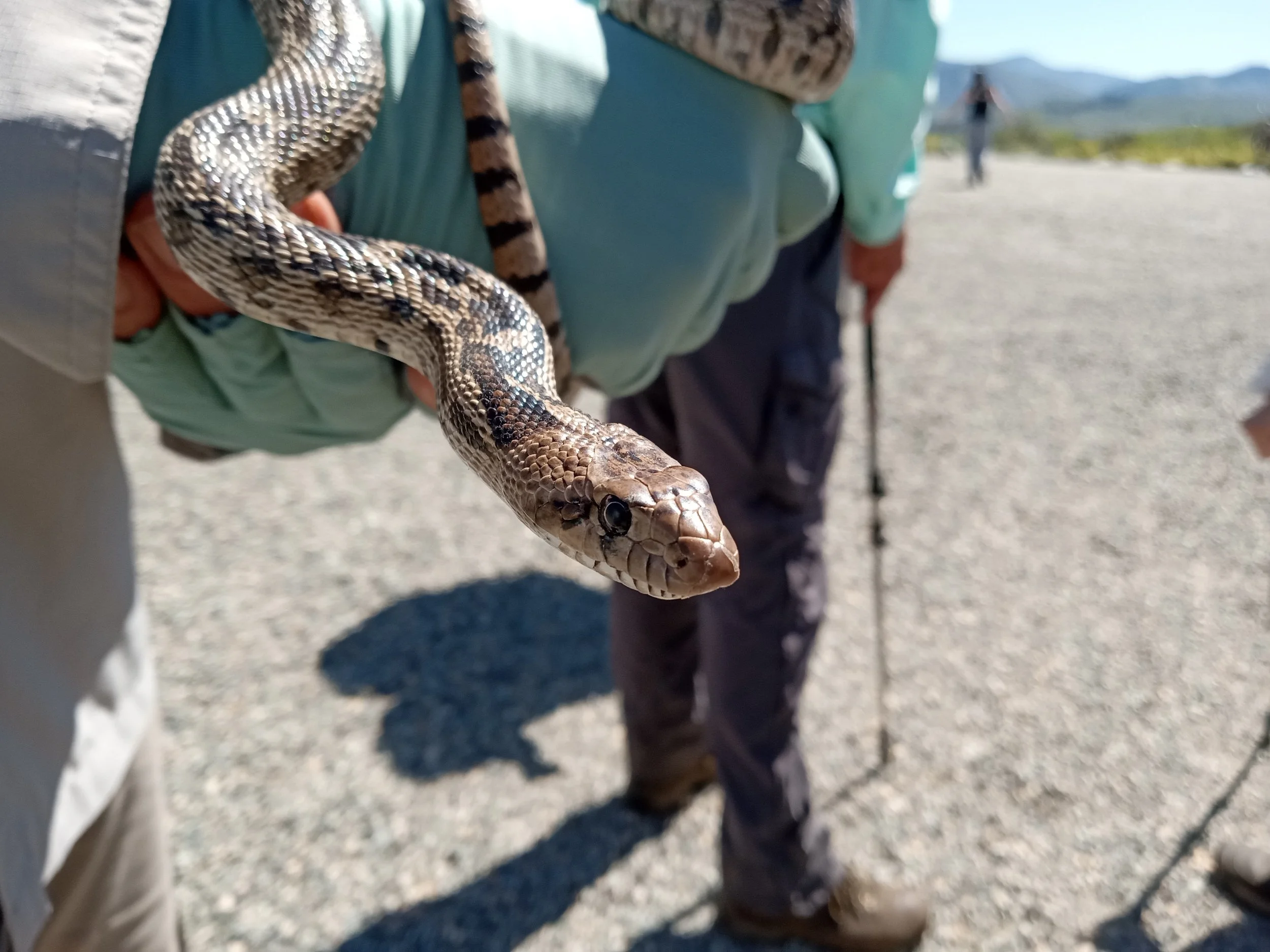
Gopher snakes can be feisty but settle pretty quickly when handled.
I have only just begun reading An Immense World, but I have long known about the concept of umwelt. Jon Vaillant also writes about it in his 2010 bestseller, The Tiger, A True Story of Vengeance and Survival. In this chronicle about a man-eating tiger in the Russian Far East, Vaillant writes about von Uexküll’s research on subjective experience as a way to understand the experiences of tigers. He quotes from Uexhüll writing in 1934:
“These different worlds, which are as manifold as the animals themselves, present to all nature lovers new lands of such wealth and beauty that a walk through them is well worth while, even though they unfold not to the physical but only to the spiritual eye.” (page 163)
I spend a good bit of time in the natural world, and believe I’m a fairly observant person. This spring and now early summer I have felt blessed to witness many wild animals going about their daily lives seemingly unbothered by my presence (at least for a short time). For example, in mid-June during a two-hour morning walk, I recorded these observations:
0945—watched a white-crowned sparrow hunting insects along the trail to Froggy Bottoms wetland. And saw it dive into the grass and come up with a dragonfly! Sparrow flew to a shore pine and called with insect in its beak. A juvenile nearby also calling. As I left and then looked back, adult flew closer to young without dragonfly, so I don’t know if it ate it or cached the insect.
1030—sharp-shinned hawk in forest along trail by Chinese Gardens. I heard someone calling but couldn’t find the caller so kept walking. It wasn’t a sound I recognized particularly. Then the call came again and it was right above me! I walked back a ways and then saw the sharpie with a bird in her talons (she looked big to me so I deduced her to be a female). She flew off shortly and I saw two dark feathers under where she’d been: junco maybe?
1100—robin along paved path going up hill at state park. Gathering several worms along road edge. Then flew off.
During this walk, I thought about all of these birds and their amazing skills at finding and capturing food. Species that take insects and birds (a sharp-shinned hawk is one of three species in the Accipiter genus, also known informally as “bird hawks” or “woodland hawks”) must possess keen eyesight and extreme maneuverability. A worm isn’t the most agile of prey, but a robin must also still be very alert to movement; additionally, there’s the matter of not minding having 3 or 4 worms in your bill at one time. In fact, birds can see four color groups, red, blue, green and ultraviolet, whereas humans can only see the first three. Apart from the senses, of course, are the physical adaptations, for example, the shorter wings of accipiters that make them able to navigate the tighter world of forests where their prey often live.
I think beyond just watching an animal, time well spent outside should include really considering how that animal experiences the world and thus how different its experience is from one’s own. I’ve spent my career trying to do this to some degree, but I feel like what I’ve read so far of Ed Yong’s book is encouraging me to make greater effort in this regard.