
Hip on Ecology
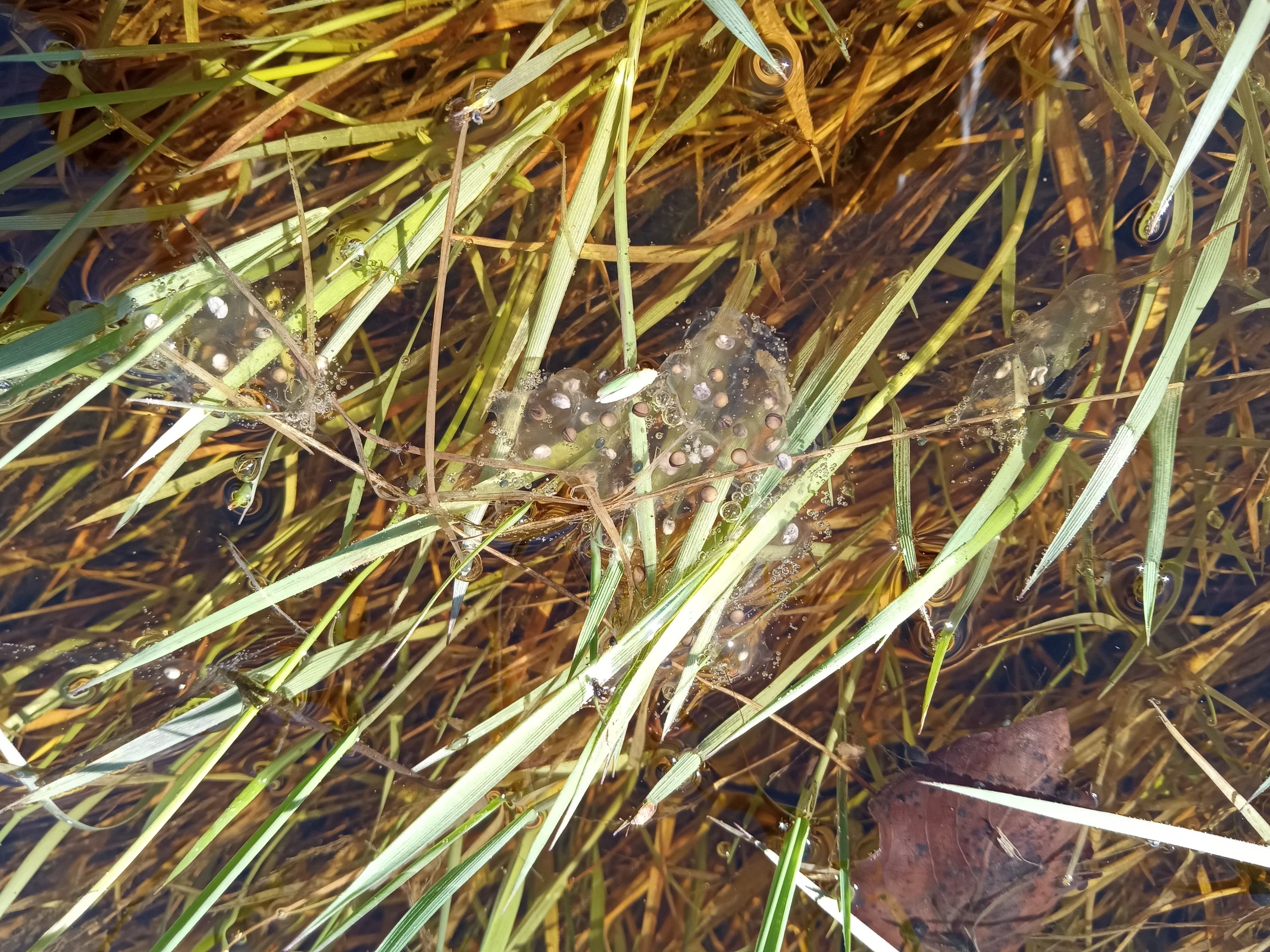
Pacific chorus frog egg masses
Nature Journal, March 21, 5:30 pm—At the wetland, first frog egg masses observed!
March 23, Midday—A female golden-crowned sparrow in the garden grabbed a pine siskin with her beak and spun the siskin around in a circle! Wow, I’d never seen such a thing before. I had just put some seed on the ground and the sparrow didn’t want anyone in her area. She also chased others and grabbed another siskin by its wing, but it got away quickly.
April 14, Midday—Very nice encounter with a chestnut-backed chickadee. I was sitting in the vegetable garden when the bird landed about four feet away from me. She began picking at something and proceeded to spend a minute or more gathering fluff for the nest. Had a big beakful by the time she flew off. Also, treefrog tadpoles now at the wetland, so tiny!
April 19, ~1030—Behind the office under a piece of scrap wood on the ground were three garter snakes. Under a second piece of wood were three northern alligator lizards, one of which had its jaws around the neck of another lizard! As I peered closer trying to make sure of what I was seeing, the one let go and they both scampered away.
**
Spring is such an exceptional time of year to be out in the natural world and to be witness to the lives of animals and plants. Actually, anytime of year is great to be doing this, but there’s so much going on in the spring that you can’t help but stumble on all manner of activity. One doesn’t have to put in much effort or wait for long periods of time or go to exotic places to see the miracles all around. In the last month on the Olympic Peninsula, the trumpeter swans have left on their journey north and the swallows and rufous hummingbirds have returned from their southern winter residences. The eggs of salamanders and frogs have hatched and now the larvae are swimming and beginning to feed on very small invertebrates. Bald eagles are sitting devotedly in their nests while other birds are beginning to construct nests or look for suitable cavities. The weather has grown warmer and so the reptiles have emerged. The changes are also very apparent in the vegetation, as the flowers, shrubs, and trees begin to bud, blossom, and leaf out. At this moment, our flowering cherry is a brilliant display of pink, fluffy blossoms and wine-colored leaves.
Being a witness to all that is happening in the natural world reminds me of the interconnectedness of all life. I have no role to play in the chestnut-backed chickadee gathering nest material, or the frogs chorusing and laying eggs in the nearby wetland, and yet my actions and my presence still affect them and their actions and lives affect me. This is ecology: the relationship of organisms to each other and to their environment.
Recently I had the good fortune to find online a beloved book from my childhood. Many years ago I had searched the internet for Death At Their Heels, an adventure story about a young boy and his older stepbrother escaping from a criminal and surviving in the wilderness. Much to my disappointment at that time I’d had no luck finding the book, but such are the wonders of the ever expanding reach of computer interconnection that when I looked for it just a few months ago, I found it easily.
What I remembered about Death At Their Heels was this: the 12- or 13-year-old protagonist Denny and his 18-year-old stepbrother Rick leave their home (their parents are away) in the middle of the night after Rick gets a mysterious phone call. They begin traveling north toward Canada and Algonquin National Park. As Denny gets more information out of Rick, he learns that they are running from a man convicted of murder who has just escaped prison, a person Rick helped put behind bars. Published in 1975 by Margaret Goff Clark, a prolific writer of short stories and books for young people on such topics as endangered species, Indigenous people, and American slavery (her most well-known book, Freedom Crossing, described the efforts of a Black boy to escape a life in bondage and the young, white kids who help him), Death At Their Heels returned me to the excitement I’d had as a child dreaming about experiencing the wilderness. Obviously I didn’t want to ever be running from a murderer, but I really liked the camping and canoeing parts.
What I hadn’t remembered about the book also surprised and delighted me. At one point, before the wilderness adventure begins, Denny and Rick are in a developed campground where Denny meets Holly, a nice girl his age. They hit it off and Holly invites him to have lunch at her family’s campsite. She makes this invitation with a warning however about her father. When Denny asks if he’s dangerous, Holly says no,
“But he’s hipped on ecology. He talks about air pollution and saving the wild lands and stuff like that all the time. Be prepared for a big lecture.”
Denny isn’t too worried and by the end of Mr. Adams’ good-natured lectures on the wilderness concepts of “pack it in, pack it out” and the importance of wolves to the ecosystem, “he was a converted to the idea of keeping nature in balance.”
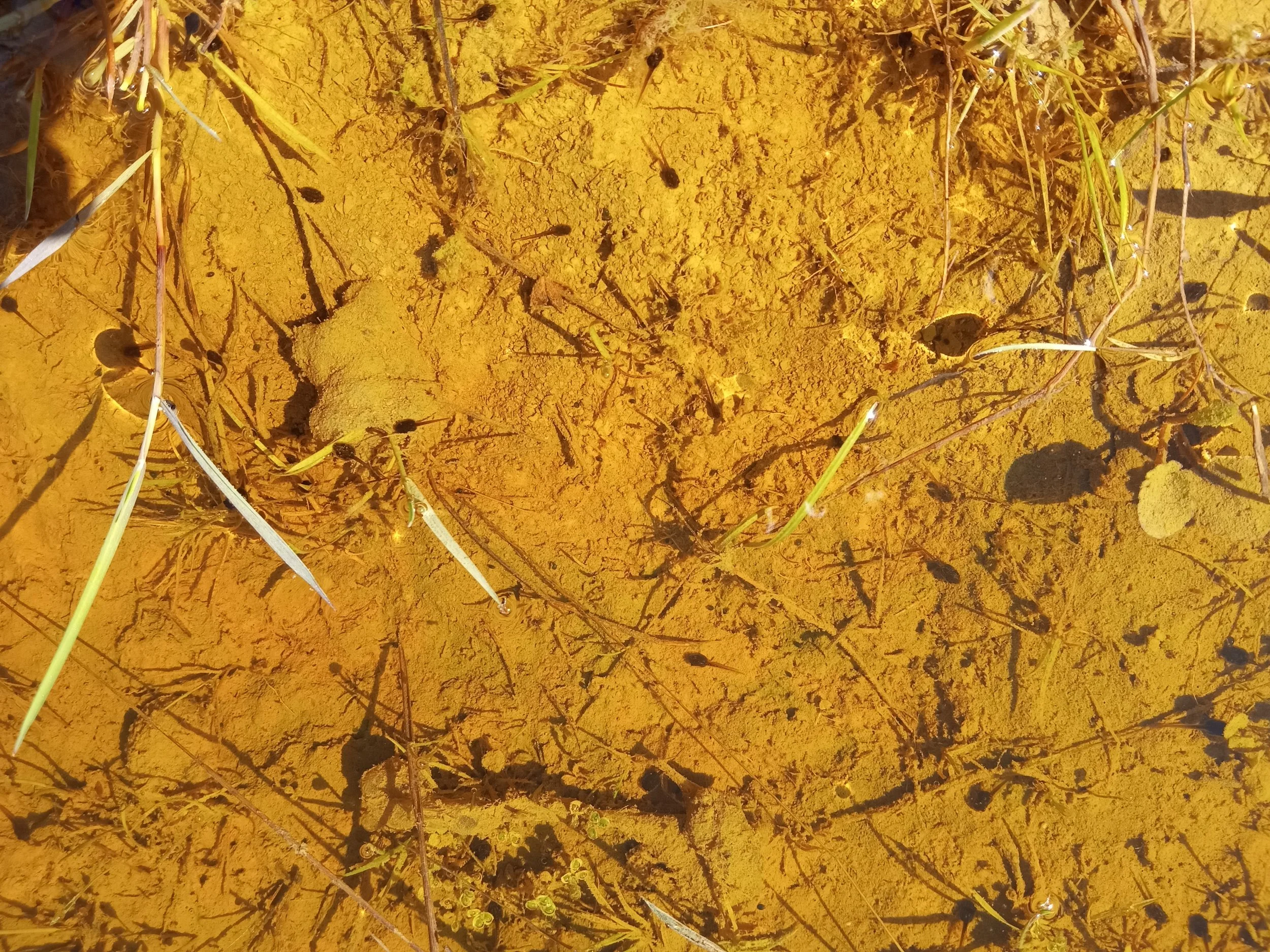
Pacific chorus frog tadpoles (little oval bodies with the tail behind)
I think the great thing about connection and interdependence is that not only are these concepts true between individuals and species, but they also apply to objects and books that link us through time to other people and ideas. I always knew I wanted to be a wildlife biologist. No one in my family worked in this, or any related, field, so where did the idea come from? This scene from Death At Their Heels hasn’t been at the forefront of my mind these last many decades, but it had surely settled somewhere in my psyche, helping to lead me down the path I’ve been traveling for the past forty years.
Among the many blessings of spring, the birds, the animals waking, the movement to and fro, and the life being born, I count other related ones: being a writer, loving to read, placing value on simply sitting and observing.
**
April 21, ~1000—A robin was bathing in one of the bird baths, very vigorous with lots of shaking once up on the rim of the bath. A white-crowned sparrow arrived and drank, then a golden-crowned sparrow came too for the same purpose. The robin went back in the water, bathed more, got out, shook, and flew away. A second golden-crowned sparrow then came by on the ground and drank several drops of water that had landed on the leaves of a heuchera plant near the bath.
