
Truth-Telling & The Power of Books
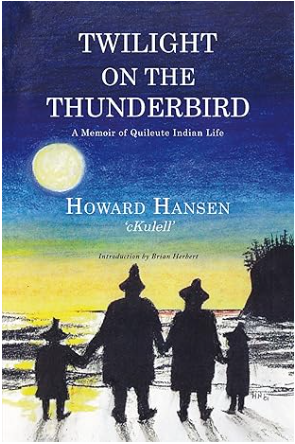
In October 2025, inspired by tribal elder Howard Hansen’s 2013 book, Twilight on the Thunderbird, A Memoir of Quileute Indian Life, I drove to La Push, Washington, to the mouth of the Quillayute River on the shores of the Pacific Ocean. Hansen’s book, a tribute to his people and the land, took a half century to complete. His linked essays tell of a world and a relationality between human and non-human beings that has always resonated with me. Hansen also describes a culture slipping away and of the struggles his people faced in the early 20th century, which were still present in 2013 when he published his book. This year, more than any other, I’ve thought much about how knowledge of, and reckoning with, the past is the key to living in the present and to shaping a sustainable future. My day in La Push was filled with a morning of exuberant downpours and an afternoon of golden autumn sunshine. Contrasts that make the Washington Coast rainforests unlike any other ecosystem in the world.
Hansen’s book is a gem and one I only happened to find while browsing in a bookstore I rarely visit at the Dungeness River Nature Center in Sequim, Washington. The beautiful cover caught my eye, then the writing pulled me in and there was no doubt I would purchase Twilight. I took this with us to Mayne Island in British Columbia at the end of September and enjoyed a wonderful few days enthralled with the powerful writing that reinvigorated for me the importance of connection to the land and to communities where human and non-human animals all figure equally. Little did I know that the last months of 2025 would be filled with more such meaningful books that I just happened to stumble upon. The journey went something like this.
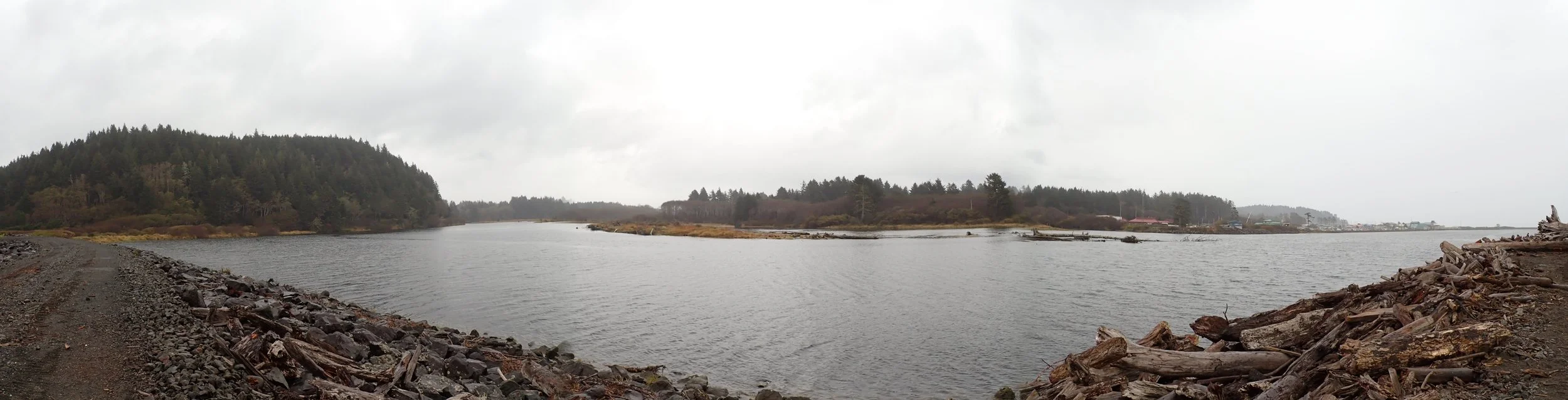
The mouth of the Quillayute River, October 2025
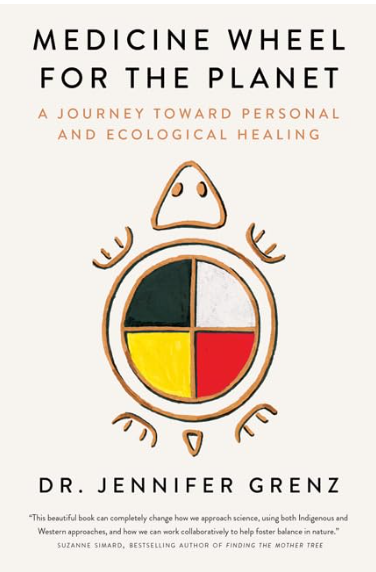
At Munro’s Books in Victoria, B.C., as we were returning from Mayne Island, I found Medicine Wheel for the Planet, A Journey toward Personal and Ecological Healing by Jennifer Grenz, a Nlaka’pamux Indigenous ecologist from B.C. Grenz describes how, after years of observation and deep reflection on her work trying to restore landscapes, she returns to an Indigenous worldview of ecosystem management. Grenz begins to incorporate a very important question into her work, that is, what is needed for balance in an ecosystem? And she pushes back against this idea that we can return ecosystems to some kind of pristine state where humans are absent from the equation (deeply faulty logic given that Indigenous people have long been managing landscapes). Grenz frames her personal and professional journeys around the four directions of the medicine wheel:
North-seeking the knowledge and wisdom of elders
East-seeing with fresh eyes/letting go of colonial narratives
South-applying new-old worldviews
West-implementing a relational approach to land reconciliation
I, too, have spent my career working to understand and restore ecosystems and Dr. Grenz’ book opened my eyes to very different ways of looking at these endeavors. As she writes in the introduction, “Facing more than a decade of professional work with new eyes is unsettling.” How about more than three decades? New realizations can be unsettling, but they are critical for moving forward.
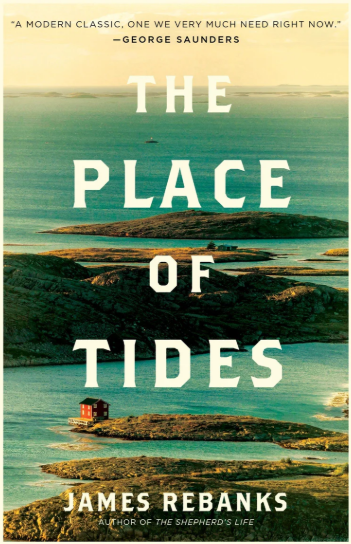
Back home in Washington State, as autumn slipped toward winter and the holidays approached, I picked up a book my wife had read some months before and raved about. The Place of Tides by James Rebanks was another book by an author I had never heard of though he had had much acclaim for two earlier books, The Shepherd’s Life and Pastoral Song, about his life as a farmer in the Lakes District of northern England. In The Place of Tides, Rebanks spends several weeks away from his farm when he goes to a remote island off the coast of Norway to work for two older women as they tend to the eider ducks that nest there every year. This ancient tradition involves a deep connection to islands and seas and to the creatures that live there. Rebanks helps Anna, the primary eider duck caretaker, who is approaching her last season in the work, and Ingrid, younger and the heir-apparent to Anna. Though Ingrid is cool to James, it isn’t until later that she admits to thinking it was a very bad idea for Anna to invite him. Yet, she eventually warms to him as she sees someone deeply interested in the work, the ducks, the women and their stories, and a way of being in the world that Rebanks feels he may have lost somewhere during his years of striving. The Place of Tides is like a song you want to listen to over and over, for its beautiful sentences and the evocative place he describes, but also for the lessons it imparts about meaningful connection to the world. Indeed, it is about the relationality that both Howard Hansen and Jennifer Grenz write about.
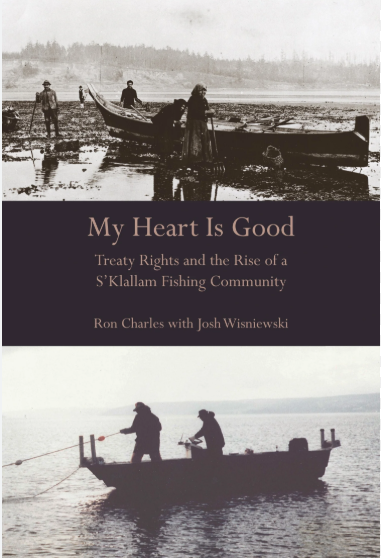
In November, we attended a reading in Port Townsend for the new book by Ron Charles and Josh Wisniewski called My Heart is Good, Treaty Rights and the Rise of a S’Klallam Fishing Community. Port Gamble S’Klallam tribal elder Ron Charles describes living through the momentous 1974 Boldt Decision that finally made good on tribal treaty rights promised more than a century earlier. Charles is uniquely poised to tell this story as he had become tribal chair in 1973 and had a front-row seat to all that followed the decision: the uproar from non-tribal fishers, the media spin on Indigenous people being afforded “special rights,” and the need to suddenly implement Judge Boldt’s order that tribes were entitled to half the catch of finfish and that this resource would be managed jointly by the state of Washington and the tribes. My Heart is Good also describes the 1994 Rafeedie decision, which affirmed these same rights with regards to shellfish harvest. I was eight years old when the Boldt decision happened and I well remember the consternation this caused in my family, people who had very limited understanding of the original treaties, as well as perhaps bigotry that I wasn’t aware of as a child. This is a very important book for every resident of the Pacific Northwest.
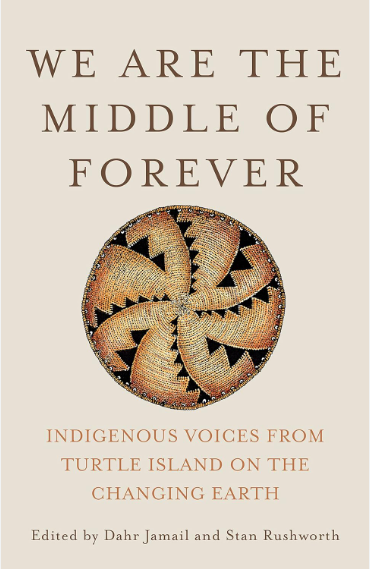
Now I am reading We Are The Middle of Forever, Indigenous Voices from Turtle Island on the Changing Earth. This book came from Edmonds Books just across the water from us and popped out at me from a shelf at the front of the store. The editors interviewed people from different Indigenous communities in America on the topic of the human impact on Earth. There is a wealth of wisdom in these pages and, for me, echoes of what I’d been reading since the end of the summer: the importance of community (and women in communities—Howard Hansen writes about this also), connection to the land, and the Indigenous worldview. Ilarion Merculieff of the Unangan people of Alaska explains that “he has always had a particular focus on restoring women to their place as our original healers and balancing the dysfunctional masculine dynamics that are so prevalent today.” When asked about how did we get to this tremendous climate emergency we’re now facing, Dr. Kyle Powys White of the Potawatomi says, “One [reason] is that people are failing to treat each other with a commitment to reciprocity.”
The words reciprocity and relationality appear repeatedly in these books. They are at the core of what we need to work on as a global society. Individualism and capitalism are destroying the planet; there can be no doubt about this when we know that societies throughout the world thrived for thousands of years and in barely more than 150 years of industrial development and wanton greed and selfishness, we now all find ourselves at a tremendous crossroads. All these books offer other ways of being in the world, a return essentially to the old ways. At the dawn of 2026, I look forward to deepening my own relationship with the land, learning from others and more about the old ways, and contributing to the good of the community however I can.

Seastacks south of La Push, Washington