
In Praise of the Water Ouzel
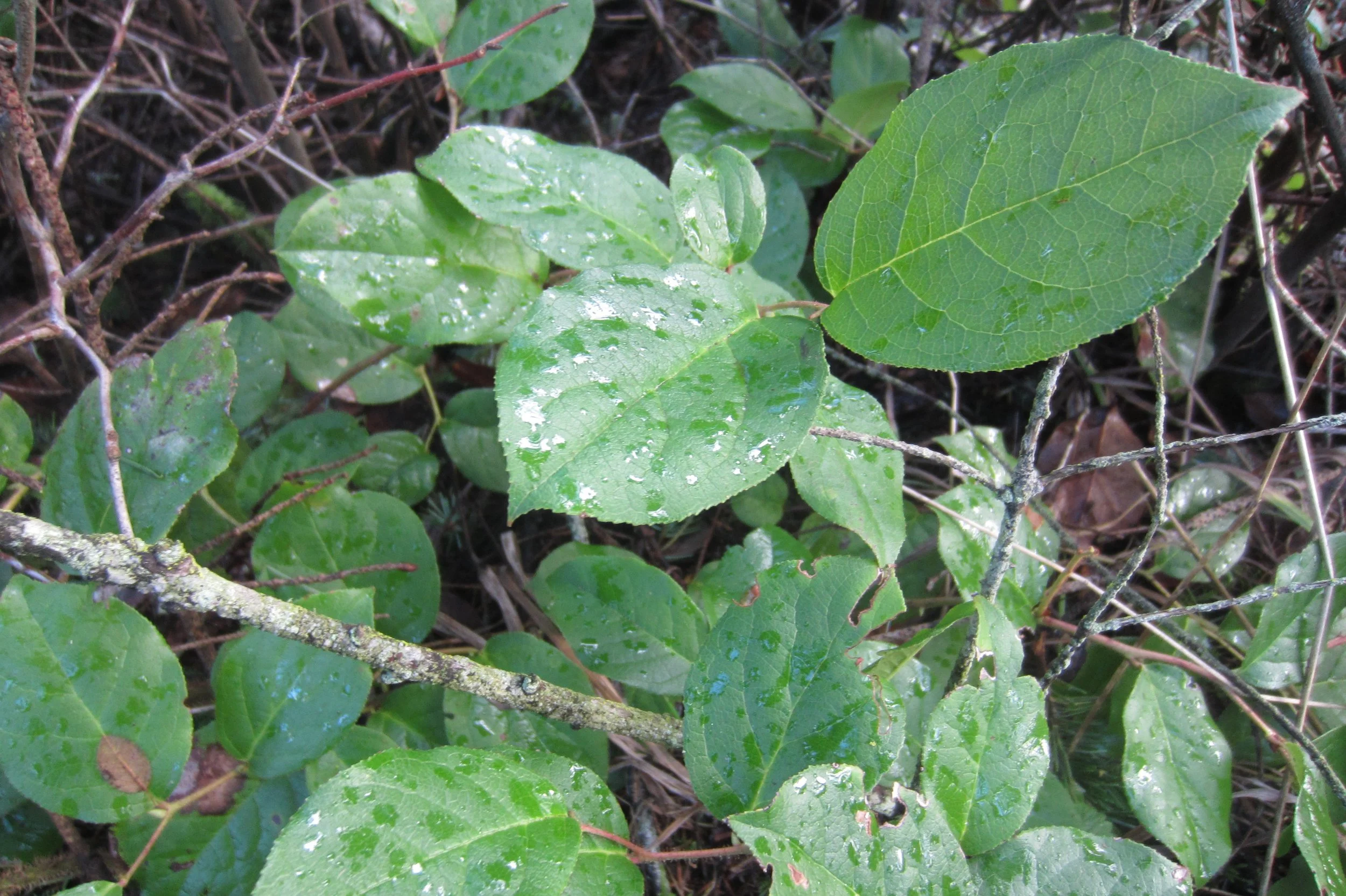
Raindrops on salal after the latest storm, December 2024
This is the time of year in the Pacific Northwest when the rain is frequent and the skies often gray. It is a world of low clouds and moist air (even when it’s not raining!), dripping trees, murky mud puddles. Contrary to some lines of reasoning, it is a great time of year to continue with one’s outdoor rambles. The opportunities to see the subtle changes each day brings in color, temperature, and the activities of birds, amphibians, and mammals are pure delight. I’ve written before about the elegant, little kinglets, including the ruby-crowned, who is only here in the winter and a frequent visitor to our suet feeder, as well as the golden-crowned, year-round residents, who often forage on the ground this time of year when usually they are high in the tree canopy. Interestingly, when the golden-crowned kinglets are on the ground, they will approach quite close to me as I remain still. The ruby-crowns also seem amenable to my presence, and I feel grateful for the chance to see them up close.
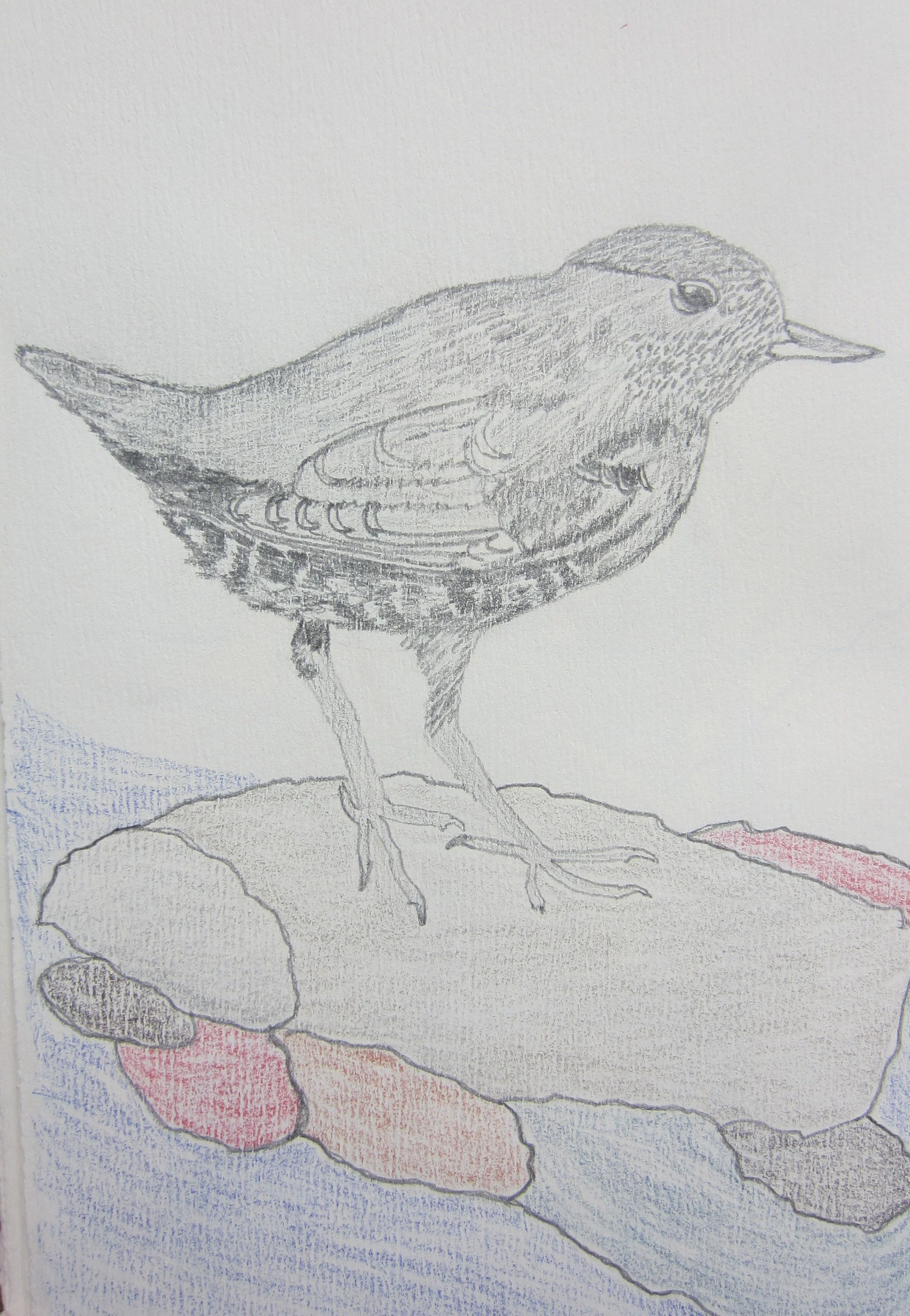
American dipper
Among all the mountain birds, none has cheered me so much in my lonely wanderings, --none so unfailingly. For both in winter and summer he sings, sweetly, cheerily, independent alike of sunshine and of love, requiring no other inspiration than the stream on which he dwells.
~John Muir, The Mountains of California, 1894
In recent days, the rain has been particularly plentiful and the temperature has risen, so the rivers are much higher. A most reliable species I’ve found to see along our region’s waterways is the American dipper, affectionately known as the “water ouzel.” The dipper is the only truly aquatic songbird in North America. They forage along the edges of streams and rivers, diving and swimming for aquatic insects, small fish, and tadpoles, and are well equipped with sharp toes for grabbing at slippery surfaces and a third eyelid that protects their eyes from dirt and debris underwater. Dippers are a delight to watch. Diving, swimming around on the surface like a small species of waterfowl, and bobbing up and down while standing (who knows exactly why they do this). These slate-gray birds are monochromatic, but at times, when a dipper is stationary, I’ve watched the lighthouse-like flashes that come from the white feathers above its eyes when it blinked. Last summer, along the Hoh River in Olympic National Park, my backpacking partner and I watched a dipper grabbing caddisflies from the river bottom. The bird smacked the aquatic insects on rocks to break their housing, then consumed the animal inside.
More recently, I’ve watched the birds along the Big Quilcene River. With the increased amount of water there are currently fewer quiet pockets of water for the dippers to forage. Yet they are undeterred as fast and deep water presents fewer challenges for them than it does for us humans. According to The Birder’s Handbook, dippers can dive, or “fly” as the authors describe their movements, to depths of 20 feet or more. They also write, “Amazingly, these birds are able to forage on the bottom of streams in which the current is too fast and the water too deep for people to stand” (Ehrlich, Dobkin, and Wheye 1988, 483). I didn’t observe this particular bird diving to such depths, but I did see her or him enter fast-moving water that seemed sure to succeed in washing her away. Of course, this never happened. She had no trouble with the swirling ripples or the rapid flow.
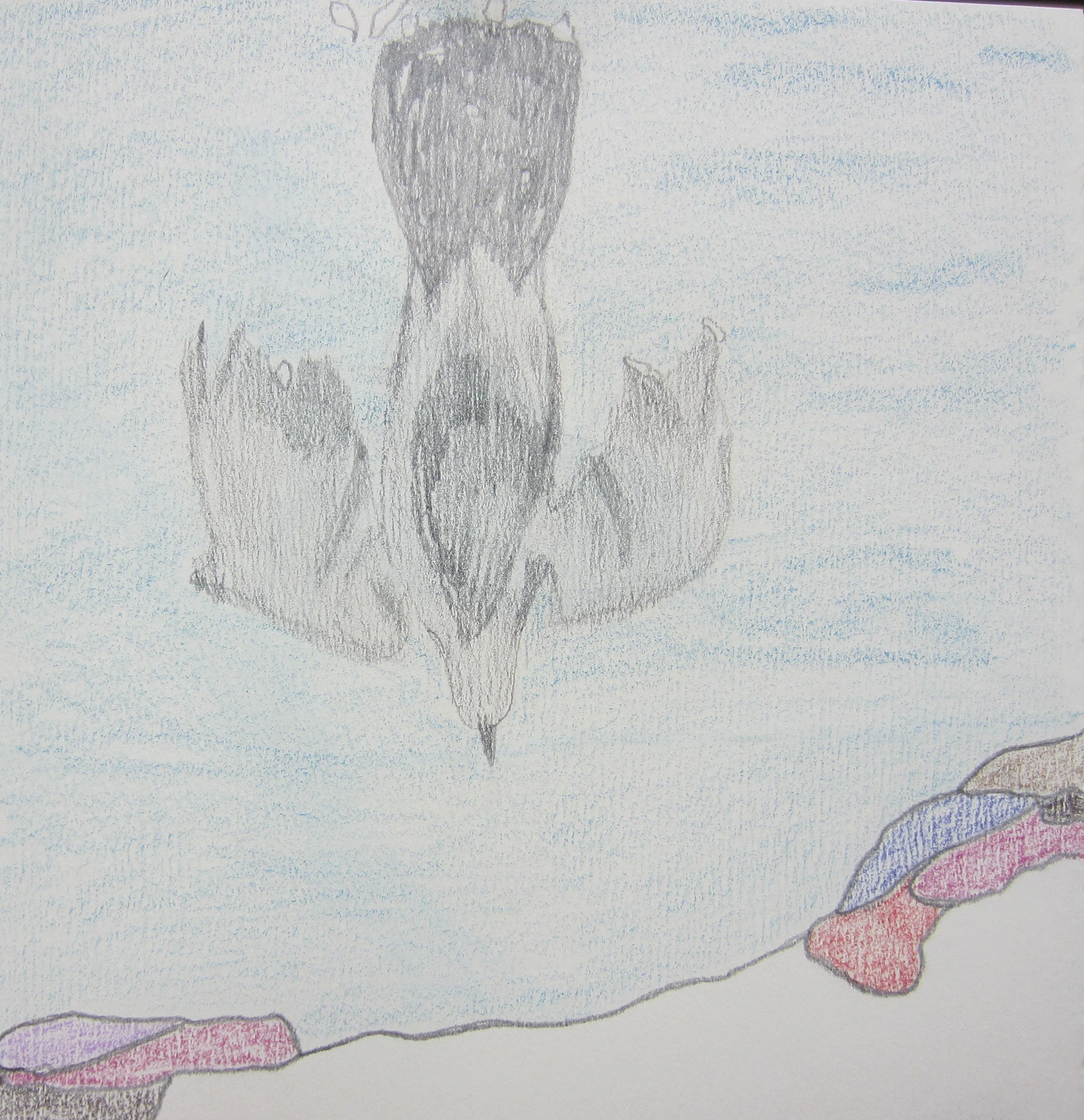
I hoped to watch the dipper triumph with a caddisfly, but she repeatedly came up empty beaked. Still, she carried on, doing the work that must be done; foraging as she does most hours of each day, failing more often than succeeding, expending energy more often than gaining it, but gathering enough nutrition to survive another day, another year, another breeding season. As I watched the dipper, flying into one pool then another, dashing through a riffle, sliding athletically down a partially submerged stick, I felt enveloped in her determination. I was keenly aware of this wonderful lesson I was being presented with. That we do the work, every minute, every day, every year, unburdened by thoughts of success or failure. Whether this work be simply human or dipper survival (recognizing, of course, that survival is rarely simple) or human efforts for the good of the community, through work that furthers social, economic, and environmental justice (endeavors very much on my mind as 2025 approaches). The natural world provides us with the path and the lessons; we have only to watch and to listen.
As I left the river, a second dipper appeared, flying rapidly downstream above the surface. The dipper I’d been watching ignored the other, carrying on with her crucial work.