
Wild Forest Home
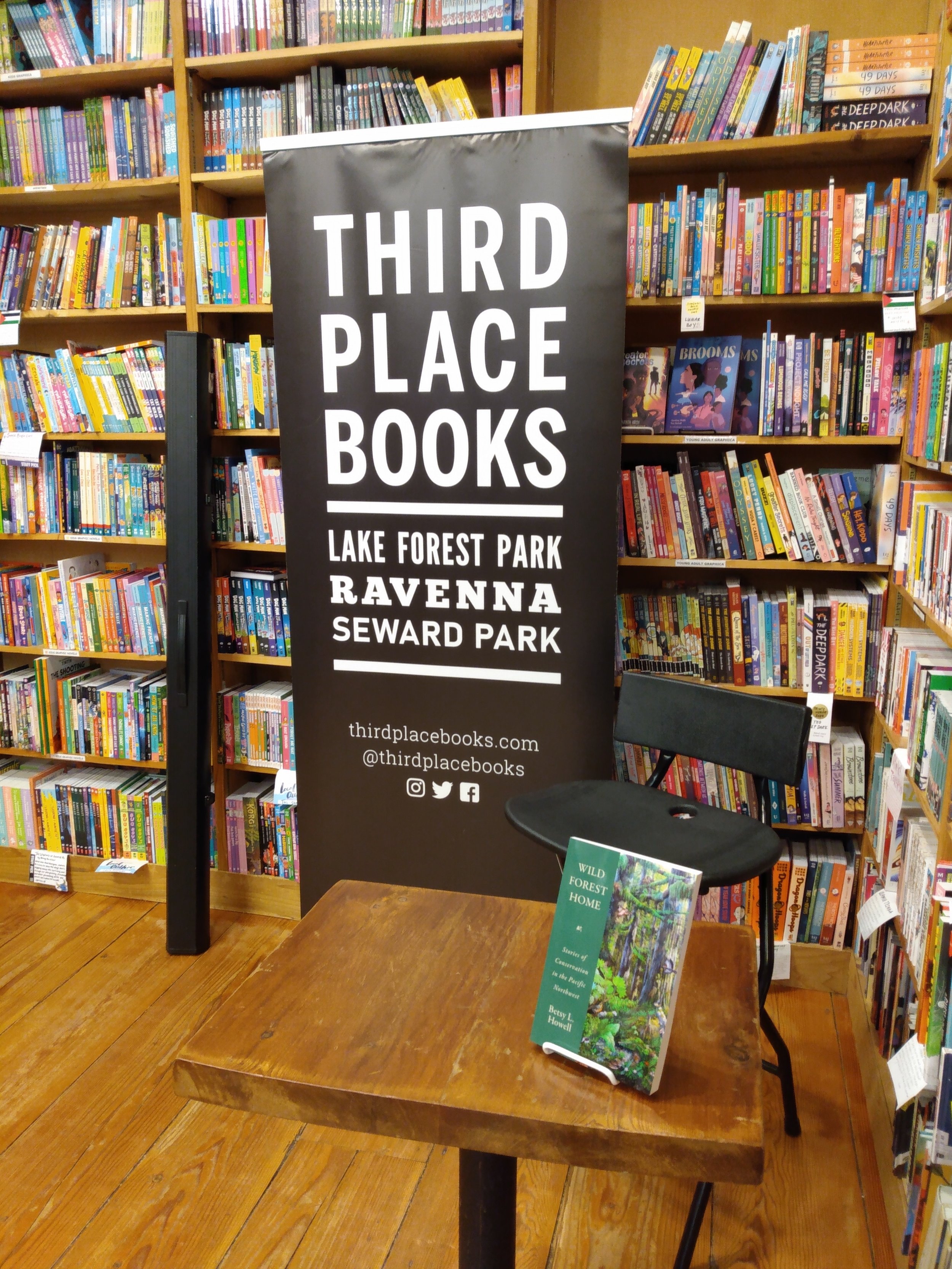
Reading at Third Place Books, Seattle, April 4, 2025
These last five months have found me speaking and writing about my newly published collection of essays, Wild Forest Home, Stories of Conservation in the Pacific Northwest. In these promotional efforts, I have shared photos and adventures from my careers in wildlife management and writing. These last nearly 40 years, since I began working in national forests in 1986, shrink for me as the past comes alive. It is a pleasure to talk with people about the importance of conservation, community, and the very interesting lives of animals that reside in the Pacific Northwest forests.
Writing one’s stories keeps them close in the heart and the mind. It can also “fix” them to some degree, making people and places appear static through description and dialogue. Yet, we know that life is anything but static. What was true in the past may not necessarily reflect today’s circumstances or tomorrow’s. Especially in these times as the natural world changes rapidly from human activities.
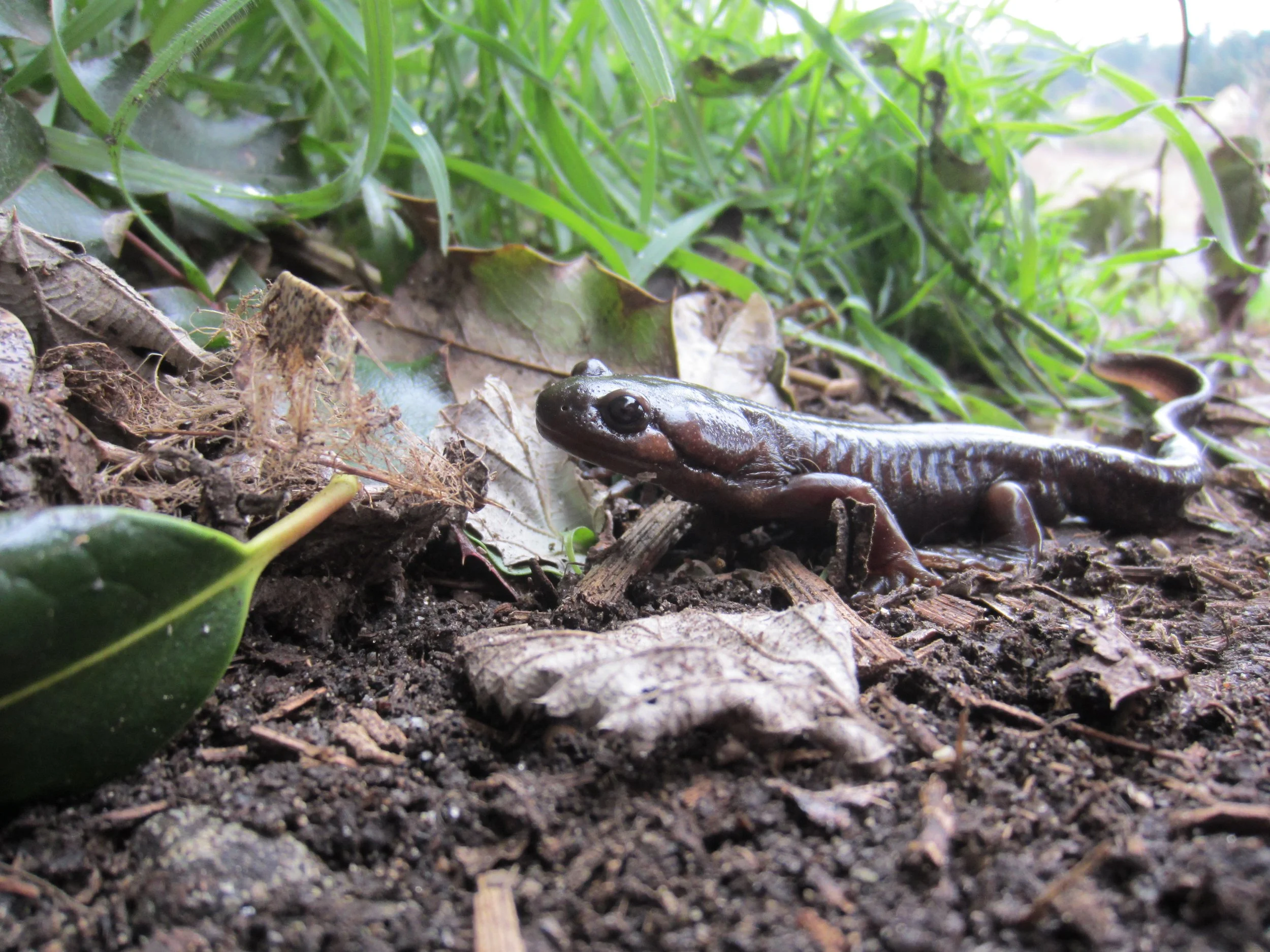
Adult Northwestern salamander, Port Townsend, WA
In Wild Forest Home, I write about an amphibian translocation project that I did in the spring of 2010. That year, I had found several egg masses of the Northwestern salamander, a species of mole salamander that breeds in water but spends most of it’s life underground in the burrows of moles, gophers, and other fossorial creatures. The egg masses, softball-sized orbs of several eggs surrounded by a protective coating of jelly, had been placed by the females in puddles along a gravel road on private timber land. This road, gated, accessed national forest land and a patch of old-growth forest along the Wynoochee River where a bald eagle pair nested. I had been walking to the eagle nest when I observed the egg masses. Despite the gate, tire tracks on the road indicated the growing salamanders weren’t safe. That evening, I bought two 5-gallon buckets and the next day returned to the road, loaded up all of my passengers, and moved them to a pond on the national forest where they could continue to grow.
Fast forward 15 years. Yesterday, I again walked down this road to see if the eagles were at the nest. This time, I walked through a landscape utterly transformed. The timber company has clearcut all the forest surrounding the road. One side of the road had been harvested shortly after the translocation project and the trees there are now 8-10 feet tall; the other side is recently cut and there is little growing. There are no puddles along the road, there is no shade along the road. The fates of the adult Northwestern salamanders who lived in the burrows of other animals in these forests will never be known. The old-growth forest on national forest land remains but is no longer surrounded by young forest. In my half hour at the river, I didn’t hear or see any eagles. Their nest tree is there and they may still be there; I will have to return to learn more.
In my review of Jon Vaillant’s book, Fire Weather, I noted his description of “the memory palace” burning down when a landscape changes beyond recognition. Vaillant writes, “Landmarks are how we navigate and scale ourselves to landscape; their steady, dependable presence projects a sense of permanence and inviolability, which helps to anchor us in space and time.” These features that we know so well can “stitch our homeworld together,” he adds. I drove right past the gate yesterday because I was looking for a gate in my mind surrounded by forest. After crossing the Wynoochee River, I knew I’d gone too far and returned. When I parked at the gate, I stepped out and felt dizzy. The forest I had known at this location was gone forever.