
History
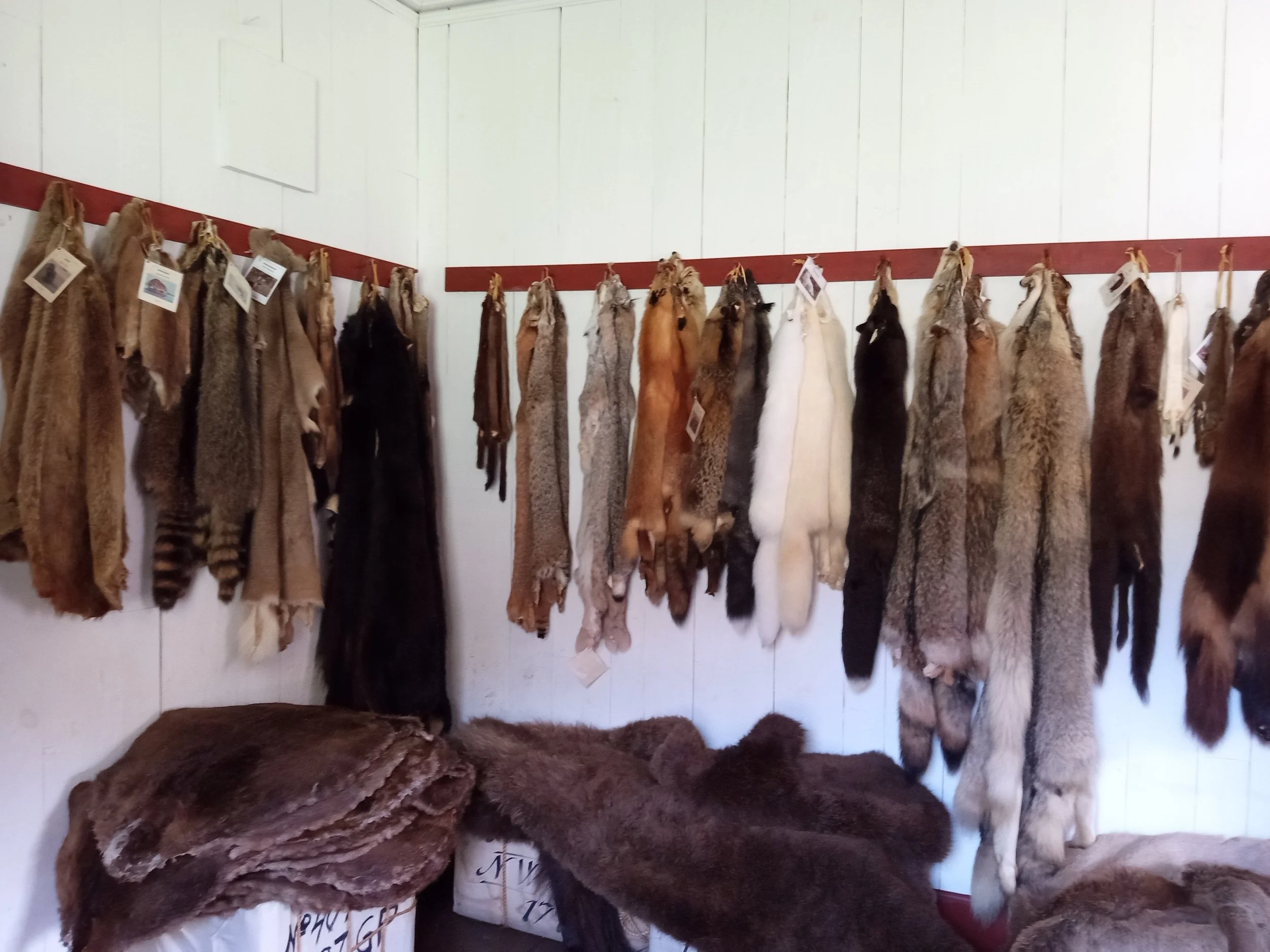
The furs hang by the dozens on hooks spanning the lengths of two walls. They are arranged by wildlife species with several examples each of marten, lynx, beaver, wolf, fox, badger, and others. These coats, well cared for, once belonged to living, breathing beings, our fellow species on the planet. Spanning years of collection, they are now on display in the recreated Grand Hall at the Grand Portage National Monument on the North Shore of Lake Superior. In another room of the Grand Hall are displays showing the process of making hats from the dense underfur of beavers. A third room replicates a London street and the businesses that sold the varied products that came from the many animals killed in this part of North America: hats, gloves, the collars of coats, and even toothbrushes. Items all long disintegrated now by time ceaselessly moving forward, except for those that remain frozen in museums such as this one.
I love history. Reading about the long ago has appealed to me since I was very young. But I don’t always feel brave when it comes to history. Many events, past and present, are horrific to say the least. Too, some things I found fascinating and even romantic as a child, e. g. pioneers “settling” the wilderness and lands already inhabited, have become less so as I’ve studied them in greater detail as an adult. For me, it can be very painful to read about American slavery, or the Holocaust during World War II, or the racism in this country that I’m proud to say I am waking up to. However, for me, there is a special kind of pain associated with the slaughter of animals and the rapacious greed and sense of domination that humans have always exhibited toward many wildlife species. For Christmas last year, my wife gave me Wild New World, The Epic Story of Animals & People in America by Dan Flores. I had wanted this book to learn more about the “deep time history of animals and humans” as the book jacket describes the work. I began reading the introduction with enthusiasm. Soon it became clear that Flores wasn’t going to be talking only about the long ago hunting and annihilation of the mammoth and giant bison and giant cats; he would also be writing about today’s bison and passenger pigeons. At the end of the introduction, he writes, “So, fair warning, some of the stories in this book won’t be easy to hear or process.” I stopped reading.
Yet, putting aside a book about upsetting topics is one thing. Completely disconnecting from humanity’s collective past is another, and impossible to do, I would venture. For example, one can’t visit the North Shore of Lake Superior, as we did recently on vacation, without reading about the fur trade of the 16th and 17th centuries. There is the Gunflint Trail that accessed the lake country and Grand Portage, the trading post 35 miles to the east, both of which were key places for the French voyageurs, who made the arduous treks into the wilderness, trapped and traded with the Indigenous people, then emerged carrying two 90-pound packs full of furs (how is that even possible?). Before this industry of animal destruction began, beavers numbered in the tens of millions in this landscape. In only a few short decades, they were completely gone, as were many of the lynx and marten, fox and mink. Ecosystems were left devastated without their engineers, the beavers, or the other predators that controlled small animal populations and maintained floristic communities by eating a wide variety of plants and dispersing those seeds across the landscape. Historically, Indigenous people had also trapped these animals but not anywhere near the level that came from a lucrative, demanding European market.
Grand Portage National Monument has a fine visitor’s center with a very well done video explaining the history of this site, which each year became a bustling gathering place for owners of the North West Company, the voyageurs, and the Indigenous people. The narration of the film is provided by a local Indigenous person and tells the history of this time from the native perspective. As a living history reenactor in the Grand Hall described to us what these gatherings looked like, I imagined how this history would be told if the animals were telling it. They would surely use the word genocide and speak of the absolute devils who came and destroyed them…for hats and toothbrushes and collars and gloves.
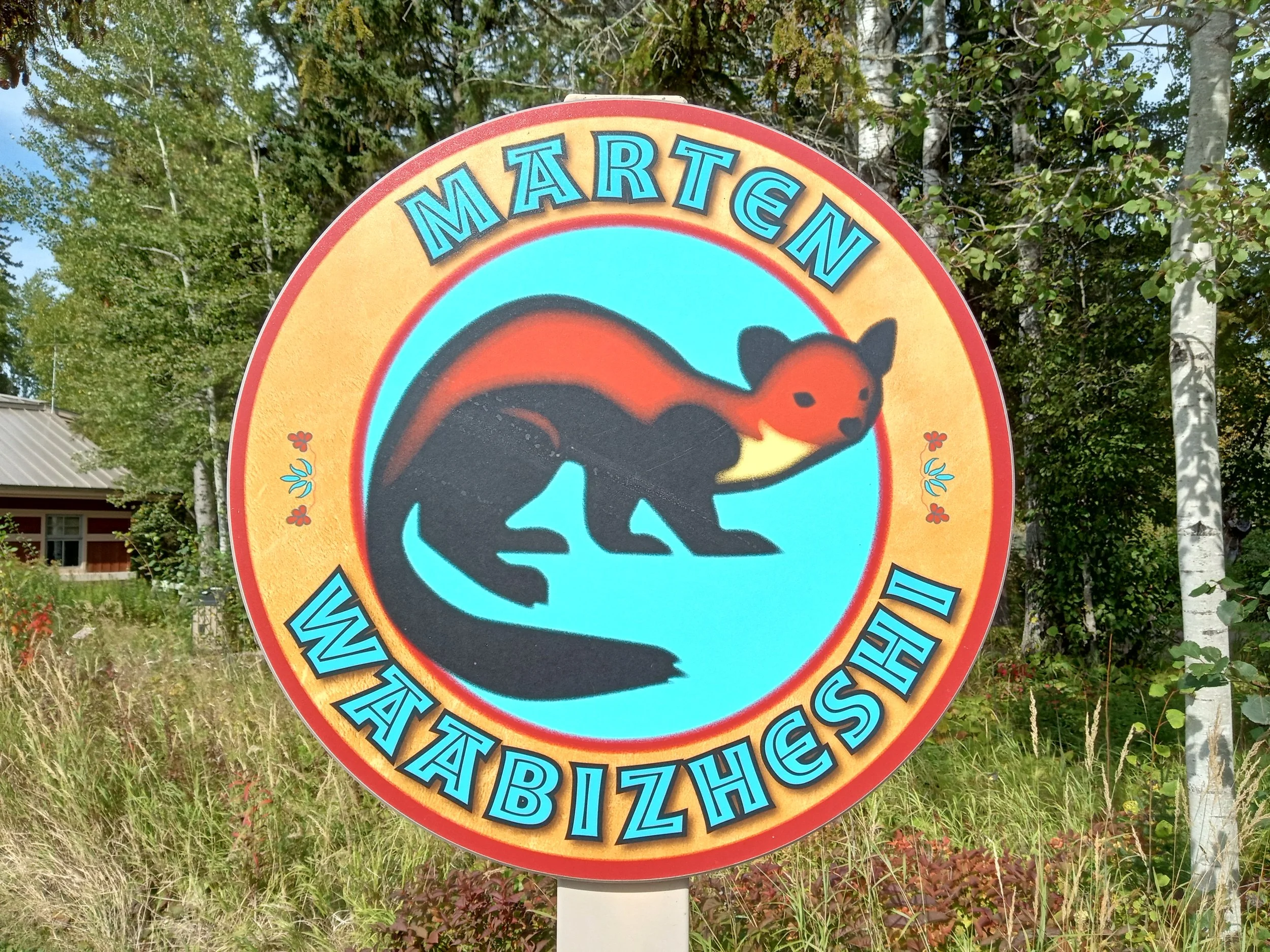
Sign at Grand Portage State Park
In addition to the monument, there is Grand Portage State Park, six miles east of the national monument and adjacent Pigeon River. This waterway was so named for the millions of passenger pigeons that darkened the skies for days every year as they migrated. Of course, these magnificent birds are now all gone, the last pigeon named Martha dying in 1914. I can sort of bear to read about what happened to the beaver, and also the bison, sort of, but it is much more difficult to think about the passenger pigeon. It must be the difference between total annihilation and not. Between closing the door on a species’ existence and there remaining some sliver of hope at our own redemption as members of the biological community.
It has to be our moral responsibility to know and understand history. Somehow, we must withstand our fear, shame, and heartbreak, and accept what has been while believing that the past does not have to be the future. We must be brave. I will return to Wild New World.
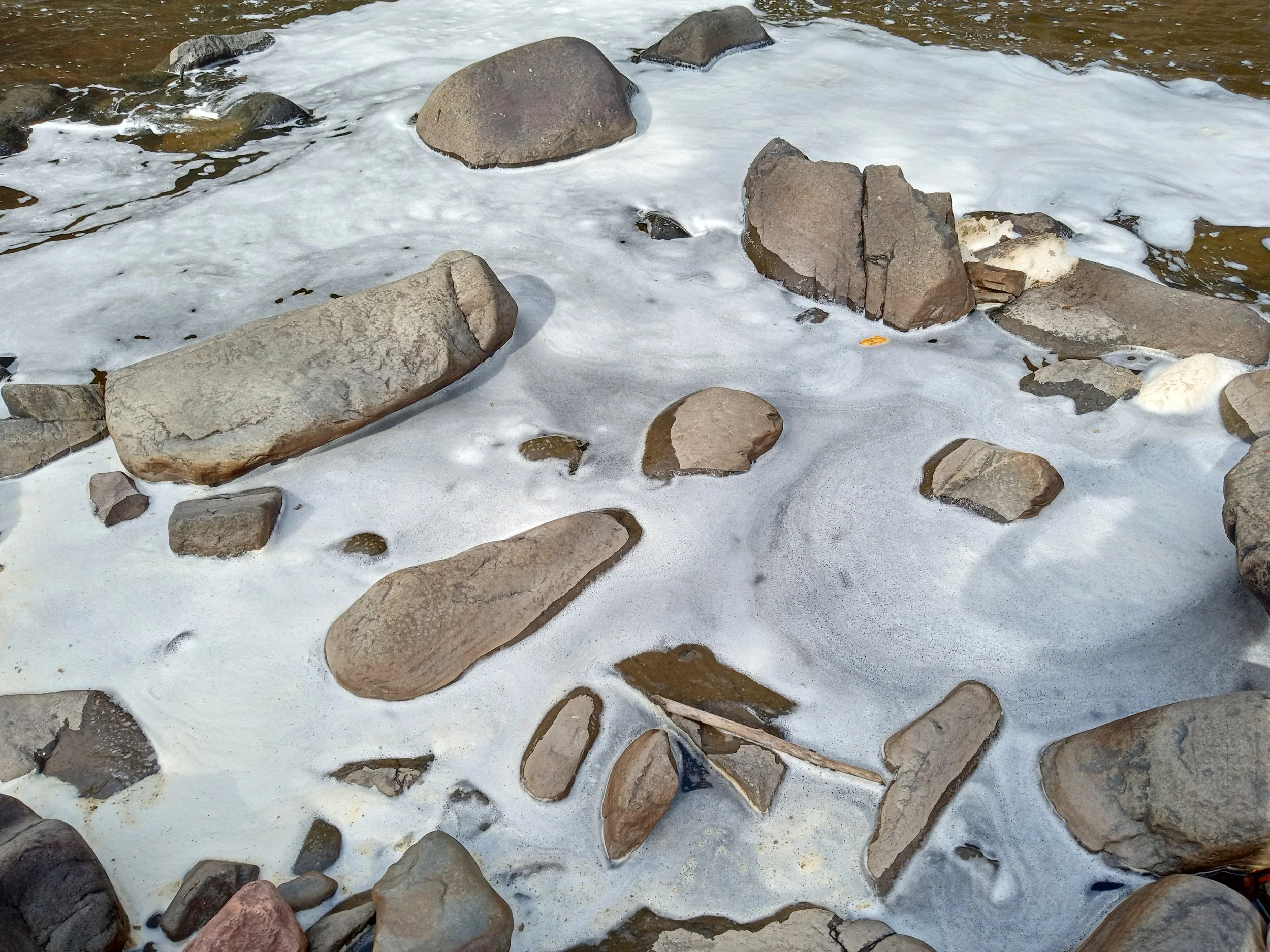
Pigeon River
Fall 2023